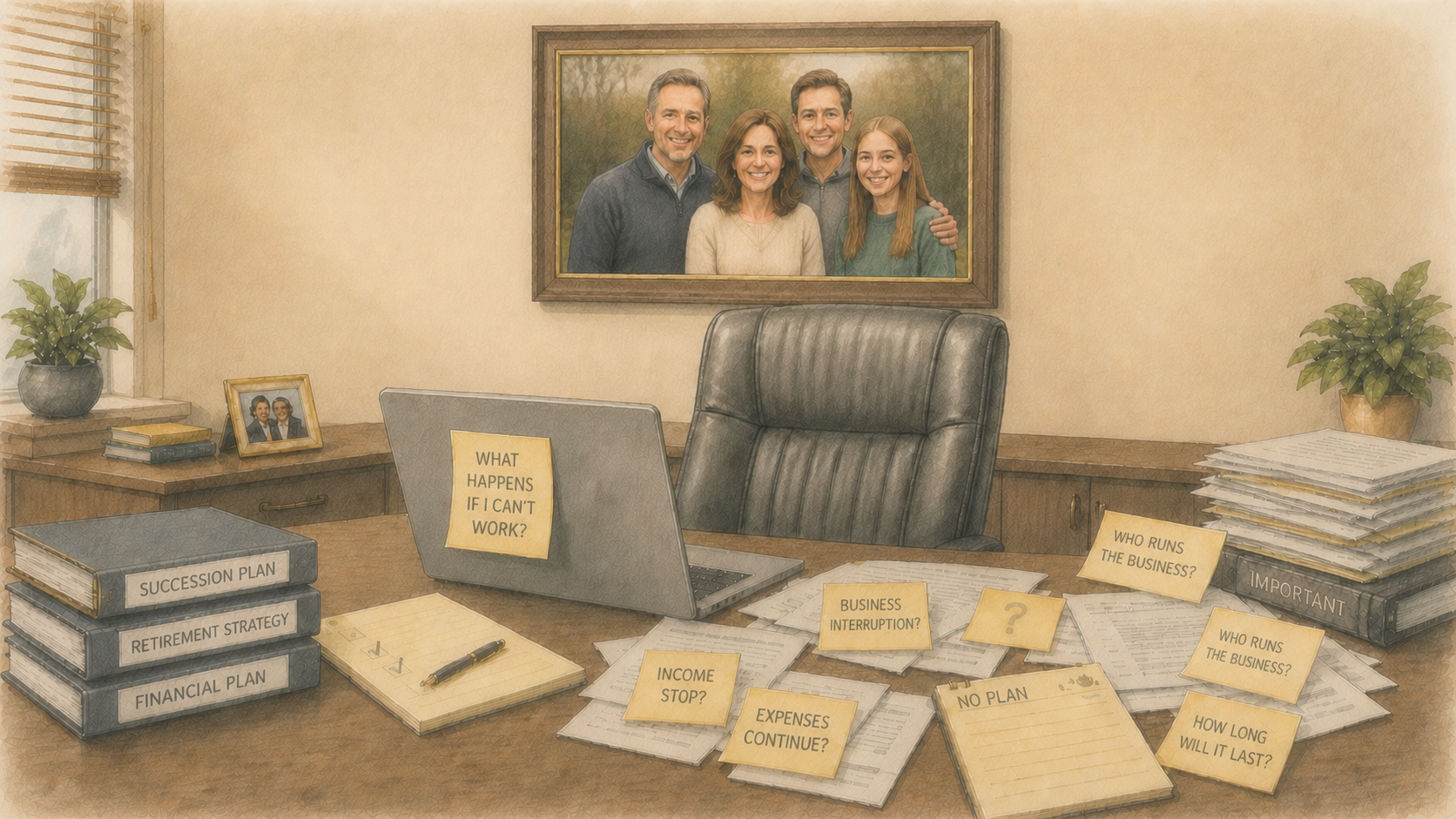
If you’re working on a plan for your exit and still can’t commit to finishing it, the plan may not be the problem. You may be working toward an outcome that isn’t the one you care about most.
Last weekend I spent half a day looking for my 20 year old Canon camera. I wanted it for social media photos, and I was sure it was in my file cabinet. I was looking for the green and white box it came in. I passed over the camera in that file cabinet, 4 separate times.
What I had forgotten was that the box got damaged years ago, and I threw it away. The camera had been sitting in its black nylon case the whole time, in plain sight. I couldn’t see it because I was searching for a picture in my head that was out of date.
I see business owners do something similar with their exit planning.
Meet Danielle
She has run her company for 25 years and has the same picture of a successful business exit that most owners have been conditioned to look for. Sell to an outside buyer, get a big payoff, and be set for life. This is what she’s been told a great exit looks like, so she has never questioned it.
Danielle has a valuation. It came back financially strong. She talked to her attorney about deal structure, and her accountant modeled the most efficient tax outcome. Every conversation helped her refine the plan, and yet she still can’t get herself to follow through on her action steps. Each time she gets close to acting on the plan, she gets distracted and postpones.
Danielle cannot explain why. Neither can her advisors. Each one of them is working hard to provide the exit she asked for: how do I get the best price for my business? Each answered the question asked, and none of it connected to what mattered most to her.
The Part She Couldn’t See
Somewhere in those 25 years, the business became more than an asset. It became something she was emotionally connected to. The people who have worked for her for years became like family. Their children became like family. The quality of their lives became something she felt partially responsible for. She was proud of that concern and uneasy about what might happen to them when the company changed hands. She never discussed any of that out loud because it didn’t fit with the picture of sale and exit with a big payoff.
So the picture never changed, and everything Danielle discussed with her professionals was shaped by it. The picture was a sale to an outside buyer that gets her set for life and prepared for retirement. It had no room for her concerns about her people and how her leaving could affect their lives, and that was quietly keeping her from following through.
An employee stock ownership purchase might address Danielle’s concerns, but she had dismissed it early on because it didn’t match the ending she’d learned was ideal. It takes different planning and can take longer for the owner to get fully paid. Just like my camera in the file cabinet, it was in front of her. She saw it but didn’t recognize it as what she was looking for.
The First Step
Danielle didn’t need more money or better deal terms. She needed to be clear on what mattered most to her. Once she said out loud what she had never said, that she wanted her people looked after, her professional team could work together to design an exit that matched her desires and that she could feel good about.
This illustrates why the first step in designing an exit plan is knowing where you want to end up, what is important to you in getting there, and what is important to you after your relationship with your business ends. The first step is to be clear on what you’re looking for. A plan can be professionally designed and still fail to deliver the results you desire most, especially if the picture in your head doesn’t match the desires of your heart.
Before You Refine Your Plan
Ask yourself what you are really searching for. Then ask whether it is still what matters to you, or whether it is the box you threw away years ago.
If you want help finding out, the Journey Clarity Assessment is a free tool designed to help business owners and professionals identify where the gaps in their planning actually exist. It takes approximately five minutes.
Take the Journey Clarity Assessment → https://donna-8d6rjoqv.scoreapp.com
Donna Glass, JD, is the founder of Living and Legacy Business Solutions, a consulting practice focused on exit strategy, legacy planning, and coordinated gap protection planning for established business owners and professionals approaching retirement transition.