There is a pattern I have observed in business owners and professionals who have not yet addressed exit and legacy planning. It's not that they do not care about what they have built. It's not that they lack the resources to plan. Most often, the reason is simpler and more human than either of those.
They have not yet turned their full attention toward it.
The things we consistently set aside are often the things we really don't believe we can solve. So we direct our focus toward the challenges directly in front of us and leave the larger, less immediate questions for later. We tell ourselves there is time. We assume the business, the people and the financial resources will still be there when we are ready.
That assumption has a cost. And that cost rarely looks the way people think it will.
A Real Situation. A Real Outcome.
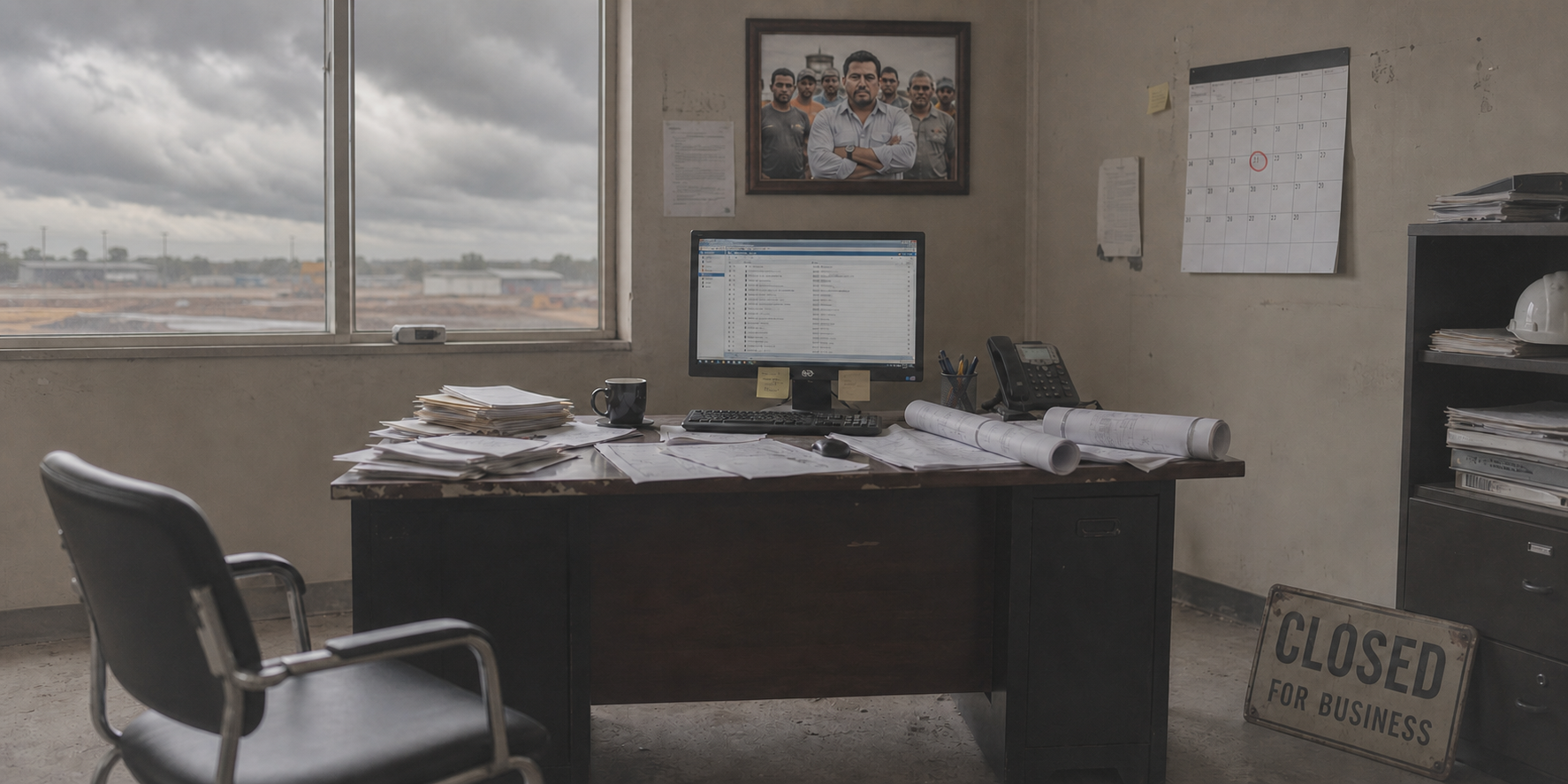
A construction company owner in his early fifties ran a thriving business. Thirty employees. Steady work. A company he had built over years of relationships, expertise, and consistent delivery. By every measure, he had created something of real value.
Then he died in his sleep.
What followed was not a difficult but manageable transition. It was a collapse.
No one had established working relationships with the vendors the business depended on to operate. No one other than the owner held legal authority to sign contracts on behalf of the company. There was no mechanism for anyone to step in and keep things moving, no authority to make binding decisions, and no financial runway large enough to bring in outside leadership while a sale or transition was arranged.
The business closed. Thirty people had to find other employment. The owner's wife, who had stepped back from work while he was building the company, had to return to the workforce.
What This Was Actually About
That outcome was not the result of a bad business. It was not a reflection of how much the owner loved his family or how hard he had worked.
It was the result of a single gap: the business had no effective plan for operating without him.
Like most business owners, he had not yet looked directly at those possibilities. He had directed his attention where business owners naturally do. To the clients. To profitability. To the employees. To the work in front of him. The question of what happens when I am no longer here remained in the background, deferred, until there was no longer an opportunity to answer it.
What the Businesses That Survive Have in Common
Businesses that survive an owner's unexpected absence share one characteristic. Someone asked the difficult questions before they became urgent ones.
They documented what the business needed to continue operating. They identified who held which authorities and capabilities, and established those authorities formally, in writing. They built enough legal and financial structure around the owner that the business could function even when the person at its center was no longer present.
That work is not reserved for large companies with legal departments and succession consultants on retainer. It is available to every business owner who decides to look at the question directly rather than set it aside for another day.
The decision to look is the starting point. Everything else follows from there.
Where Is Your Attention Absent?
If you have not yet asked what would happen to your business if you stepped away today, that is where the work begins.
The Journey Clarity Scorecard is a free tool designed to help business owners and professionals identify where the gaps in their planning actually exist. It takes approximately five minutes and gives you a starting point for where your attention is most needed.
[Take the Journey Clarity Assessment → https://donna-8d6rjoqv.scoreapp.com]
Donna Glass, JD, is the founder of Living and Legacy Business Solutions, a consulting practice focused on exit strategy, legacy planning, and coordinated gap protection planning for established business owners and professionals approaching retirement transition.